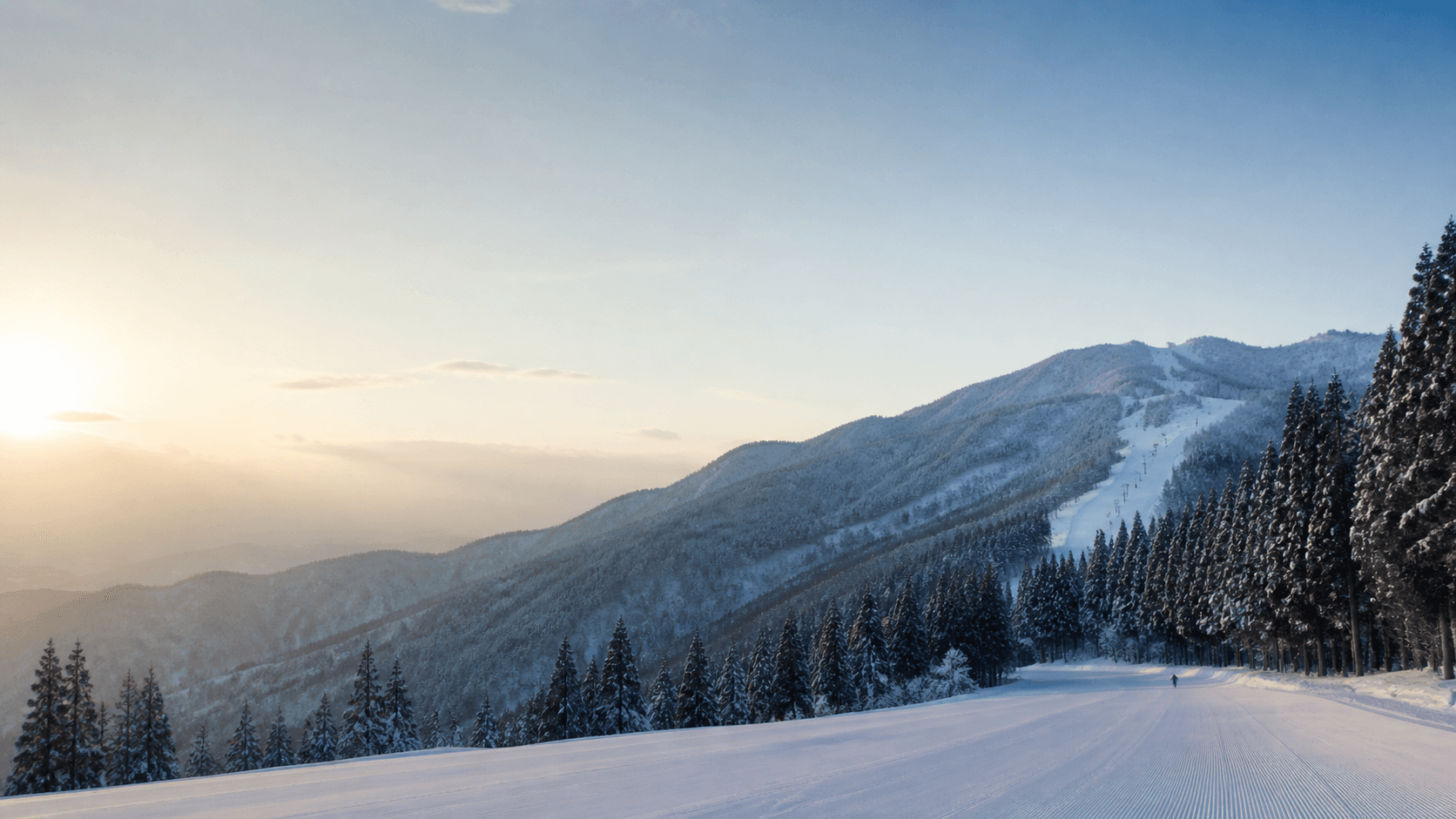
Mountains / Japan

Hakuba Valley JP

2,4936,007 ft · long-term average 430" per season · window ticket ~$68 · prime window Dec–Jan

PassCast reseeded 2026-07-10 · season 2026-27

The short answer: PassCast projects a median of 338" at Hakuba Valley for 2026-2785% of a typical season — with a skiability rating of 57/100, ~17 powder days, and Dec–Jan as the prime window. Updated daily from 10,000 simulations.

57SKIABILITY / 100Solid skiing expected
Snow quantity 35%74
Season lean 30%32
Powder days 20%68
Bust risk 15%51
Median sim
338" (85% of typical)
P(above typical)
32%
Powder days
~17 (6"+ days)

80% of simulated seasons land between 231" and 524". Reseeded daily as ENSO observations, CPC outlooks, and SEAS5 runs update.

10,000 simulated 2026-27 seasonsENSO-weighted resampling of 36 real seasons (1990–2026) at Hakuba Valley, tilted by the live seasonal outlook

100"200"300"400"500"600"700"800"P10 231"P50 338"P90 524"typical 397"

Highlighted bars span the middle half of outcomes (P25–P75). The yellow dashed line is a typical season — the median of the last 36 at this mountain.

What's driving this forecast

ENSO: El Niño favored (99%)

The 2026-27 season is simulated by resampling Hakuba Valley's historical seasons weighted toward El Niño analog years. NOAA CPC El Niño Advisory (June 11, 2026): El Niño conditions are present and expected to strengthen into winter 2026-27, with a 63% chance of a very strong event (Niño3.4 ≥ +2.0°C) during Nov-Jan. CPC DJF strength odds: very strong 46%, strong 33%, moderate 16%. IRI (June 22) concurs at 98% El Niño for DJF. Latest observed ONI (AMJ 2026): +1.0.

Regional ENSO signal: unfavorable (moderate)

El Niño weakens the East Asian Winter Monsoon — fewer Siberian cold surges across the warm Sea of Japan means fewer sea-effect powder days (Ueda et al. 2015). El Niño seasons average ~6% less snowfall nationally, but 1997-98 and 2015-16 cut low-elevation Honshu to near half of normal; Hokkaido and high terrain are most resilient. Applied as a -4% tilt at partial weight.

ECMWF SEAS5 ensemble: dry Nov–Jan (41% of normal)

The 51-member SEAS5 seasonal forecast puts Nov–Jan snowfall at this grid point at 41% of its ERA5 normal (ensemble mean 103", spread 64–137"). Applied as a -10% tilt — experimental, heavily shrunk and clamped because seasonal models and reanalysis have different biases.

Pre-season: climate drivers only

Day-to-day weather models have no skill this far out, so the near-term forecast contributes 0% weight today. The simulation leans entirely on ENSO-conditioned climatology — exactly what an honest seasonal outlook should do in summer. Weighting shifts toward live forecasts as opening day approaches.

The regional readJapan · from the 2026-27 outlook

A strong El Niño weakens the East Asian Winter Monsoon, and fewer Siberian cold surges across the Sea of Japan means fewer of the sea-effect powder days that make Japanuary. The strong-event analogs matter: 1997-98 and 2015-16 were two of Japan's leanest, latest-starting winters, with some low Honshu resorts near half of normal; 2023-24 began painfully late before February rescued Hokkaido. Expect a delayed start, rain events at low-elevation Honshu areas, and the best resilience in Hokkaido (Niseko, Rusutsu) and high-altitude Honshu. Aim for mid-January to mid-February — unless the Arctic Oscillation goes strongly negative, the one wildcard that can override El Niño entirely.

Full global outlook →

Month by monthENSO-conditioned analog medians vs a typical month — when this season should deliver

Nov85%Dec100%Jan110%Feb82%Mar112%Apr100%
Typical month (median)ENSO-conditioned lean, wetENSO-conditioned lean, dry

Prime window: Dec–Jan — the deepest contiguous stretch of the conditioned season. Aim the trip there.

The analog poolEvery season since 1990 at Hakuba Valley (ERA5, calibrated to the resort's reported average), colored by ENSO phase

200"375"575"775"1990-91: 346" (ONI +0.4)1991-92: 313" (ONI +1.7)1992-93: 369" (ONI +0.1)1993-94: 359" (ONI +0.1)1994-95: 350" (ONI +1.0)1995-96: 427" (ONI -0.9)1996-97: 315" (ONI -0.5)1997-98: 325" (ONI +2.2)1998-99: 344" (ONI -1.6)1999-00: 399" (ONI -1.7)2000-01: 438" (ONI -0.7)2001-02: 360" (ONI -0.1)2002-03: 436" (ONI +0.9)2003-04: 320" (ONI +0.4)2004-05: 367" (ONI +0.6)2005-06: 443" (ONI -0.8)2006-07: 257" (ONI +0.7)2007-08: 345" (ONI -1.6)2008-09: 360" (ONI -0.8)2009-10: 402" (ONI +1.5)2010-11: 374" (ONI -1.3)2011-12: 393" (ONI -0.7)2012-13: 419" (ONI -0.3)2013-14: 395" (ONI -0.3)2014-15: 450" (ONI +0.7)2015-16: 298" (ONI +2.6)2016-17: 539" (ONI -0.2)2017-18: 616" (ONI -0.8)2018-19: 564" (ONI +0.9)2019-20: 519" (ONI +0.6)2020-21: 579" (ONI -0.9)2021-22: 709" (ONI -0.8)2022-23: 502" (ONI -0.5)2023-24: 634" (ONI +1.9)2024-25: 700" (ONI -0.5)2025-26: 515" (ONI -0.4)19901995200020052010201520202025
La Niña winterNeutralEl Niño winterTypical winter (median)

Pass math for Hakuba Valley

Verdicts run the full simulated snow distribution through breakeven math at ~$68/day window prices. Add trip legs on the home page to compare passes across your whole season.

10days
Epic Pass$1,119
SKIP
0%seasons it pays off$779expected vs ticketsbreakeven days
  • Covers Hakuba Valley (5d).
  • Snow-adjusted across the simulated seasons, expect ~9.5 covered days; the pass beats window tickets in 0% of 10,000 simulated seasons (mean shortfall $779).
  • At this plan, window tickets or a cheaper product wins.
Unlimited, unrestricted access at all Vail Resorts mountains — no blackouts, no reservations.

Hakuba Valley 2026-27: straight answers

How much snow will Hakuba Valley get in the 2026-27 season?
PassCast's latest 10,000-run simulation (reseeded 2026-07-10) puts the median at 338 inches — 85% of a typical season at Hakuba Valley — with 80% of outcomes between 231 and 524 inches. The forecast blends Hakuba Valley's own 36-season ENSO analog record with NOAA's seasonal outlook and the ECMWF SEAS5 ensemble.
Is a season pass worth it for Hakuba Valley in 2026-27?
Hakuba Valley is on Epic Pass for 2026-27, but with day caps at this mountain the pass only pays off combined with days at its other resorts — the simulator on this page runs that math for your plan.
When is the best time to ski Hakuba Valley in 2026-27?
Dec–Jan is the prime window — the deepest contiguous stretch of the ENSO-conditioned season at Hakuba Valley. Month-by-month medians are charted on this page.
How reliable will the snow be at Hakuba Valley this season?
The simulation gives Hakuba Valley a 32% chance of beating its typical season and a median of about 17 six-inch-plus powder days. Its skiability rating is 57/100 (“Solid skiing expected”), updated daily.

Sources: ERA5 reanalysis & multi-model forecasts via Open-Meteo · NOAA CPC ONI, ENSO advisory & seasonal outlook · ECMWF SEAS5 · pass prices verified July 2026. See methodology for the honest fine print.